Earlier screenings and interventions have helped increase survival rates for many cancers. However, pancreatic cancer continues to remain among the deadliest. Of the more than 67,000 people estimated to be diagnosed with pancreatic cancer in the U.S. this year, more than 52,000 are likely to die from the disease.
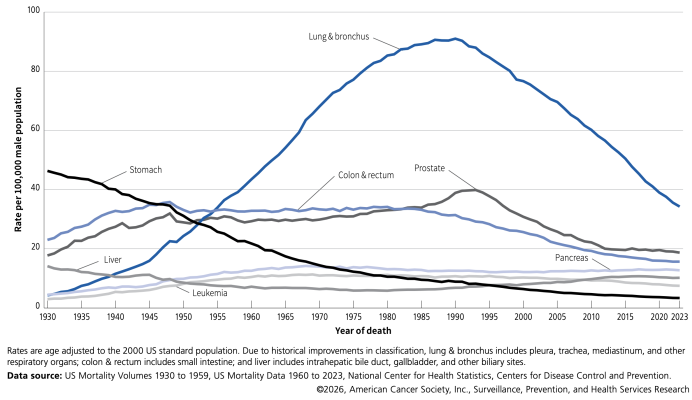
We believe there is an opportunity to bend that curve. Pancreatic cysts, particularly mucinous types, are the most common identifiable precursor lesions for pancreatic cancer. These lesions are often detectable, trackable, and in many cases, actionable.
In a recent webinar, Dr. Russell Langan, Director of Surgical Oncology at RWJBarnabas Health, highlighted how his hospital system has achieved real results by deploying Eon’s AI-powered longitudinal patient management platform to turn incidental findings into early treatment opportunities and close gaps in care. He also shared his perspective on why health systems need to rethink their approach and take a proactive rather than passive surveillance approach to pancreatic cancer.
Pancreatic cysts are not rare findings. Of the more than 40 million MRIs performed each year in the U.S., up to 20 percent typically reveal a cyst. That means every health system encounters at-risk patients. Opportunities exist to improve the quality of care for patients at risk

Right now, there is a critical gap — more than half of all patients whose imaging reveals a pancreatic cyst receive no follow-up care. Many are never entered into a surveillance pathway. Others fall off due to inconsistent follow-up or communication gaps. Unfortunately, a percentage of these patients will return with pancreatic cancer.
This is a missed opportunity for early intervention.
Pancreatic cysts, especially mucinous types like IPMNs and MCNs, are known precursors to pancreatic cancer. While they cannot be prevented, early identification and appropriate follow-up can dramatically alter the disease trajectory and, therefore, outcomes.
Pancreatic cysts are modifiable clinical signals. Once they are uncovered, providers can address cysts with guideline-based surveillance and risk stratification to improve outcomes before disease progression. If patients are appropriately followed through guideline-driven pathways, we could significantly move the needle for certain patients with pancreatic cysts.
Unfortunately, many pancreatic cyst surveillance programs still rely on fragmented systems and outdated models. Common issues with these models include:

Without centralized oversight and intelligent systems, many patients are left at risk, and those with the greatest clinical need often face the biggest barriers to care.
Eon’s disease-specific AI-powered solution automatically identifies patients, contacts patients and physicians, longitudinally tracks patients, and provides intelligent, guideline-driven recommendations for care. The solution reduces administrative burden on care teams, and allows them to focus on care delivery to high-risk patients.
Many pancreatic cysts are incidentally discovered during imaging for unrelated conditions. These findings are documented, but without a formal, dynamic surveillance program in place, they are rarely tracked, leading to missed opportunities for intervention when the disease is still manageable.
As many as one-third of pancreatic cancers can be traced back to an earlier cyst finding. These are not hypothetical cases. They are patients who could have been diagnosed earlier and treated more effectively if their cyst had been monitored.
This is not just a clinical gap. It is a lost chance to save lives.
Using Eon’s AI-powered platform, RWJBarnabas Health transformed its pancreatic cyst program from a manual process into a high-performance longitudinal surveillance model. The results speak for themselves.
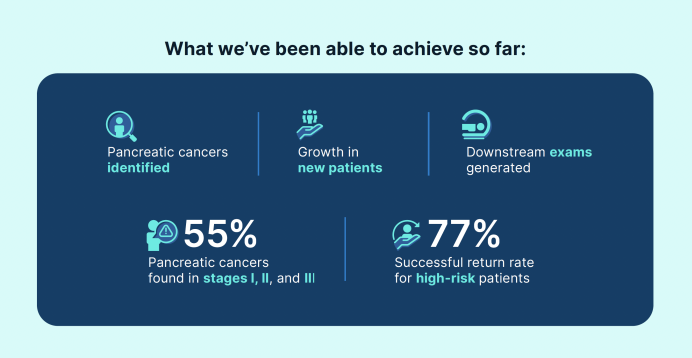
These metrics demonstrate what is possible when clinical intelligence, evidence-based guidelines, and automation are integrated into a single system. Surveillance becomes scalable. Outcomes improve. Patients receive the care they need on time.