By Dr. Emily Cassidy,
Thoracic Surgeon, Our Lady of the Lake
As a thoracic surgeon, few moments are more difficult than recognizing a missed opportunity for early diagnosis, especially when the evidence was there all along.
I recall reviewing a patient’s chart and discovering a chest CT from two years prior that clearly documented a suspicious pulmonary nodule. That patient was now in my clinic with Stage II lung cancer. The nodule had progressed, and the window for curative intervention had narrowed.
I asked the patient, “Were you aware you had this lung nodule a couple of years ago?” The response was uncertain. There had been no structured follow-up, no clear handoff, and no continuity of care. Unfortunately, this scenario was not an anomaly.
In my home state of Louisiana, the data underscores the urgency. While all states need to improve lung cancer outcomes, we rank near the bottom nationally for early-stage detection and five-year survival. Patients present late, and the consequences are profound. It became clear to me that our existing systems, which were manual, fragmented, and reactive, were not sufficient to manage the volume and complexity of incidental findings in our region.
That realization led us to rebuild our lung cancer program from the ground up. Today, we’ve achieved improvements in early-stage detection, care coordination, and clinical outcomes. This transformation happened through disciplined change, collaboration, and a strong foundation.
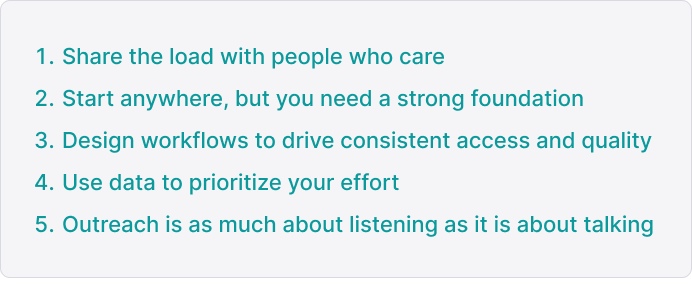
The following five lessons shaped our journey. They are not abstract principles; rather, they are practical insights forged from real challenges. I share them in the hope that other institutions can accelerate their own progress and, most importantly, ensure that fewer patients are lost to a lack of follow-up.
Louisiana Ranks:
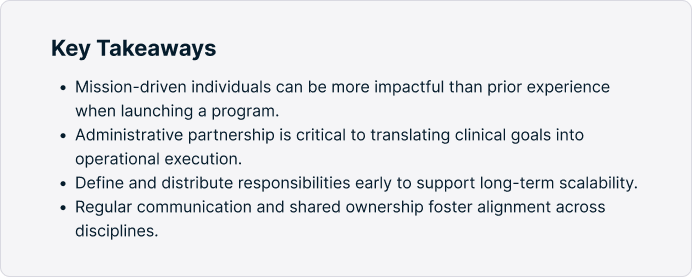
No matter how committed I was clinically, I knew that I could not build a scalable lung nodule program alone. The complexity of managing incidental findings, ensuring timely follow-up, and coordinating across departments requires collaboration. That begins with surrounding yourself with people who not only understand the mission but care enough to carry it forward.
In our case, it started with one newly hired coordinator. She had never worked with pulmonary nodules before, but she was deeply committed to doing the right thing for patients. That matters more than prior experience. She learned quickly, asked the right questions, and helped build the foundation of what would eventually become a high-volume, multi-site program.
Equally critical was the partnership I developed with a mission-aligned administrator. Without that support, none of our clinical ideas would have translated into operational reality. Together, we worked to secure resources, navigate software evaluation and purchasing decisions, and identify resource-efficient ways to grow. This administrative collaboration was essential for initial implementation and long-term sustainability.
As our program matured, we expanded that foundation into a dedicated, multidisciplinary team. Responsibilities were clearly shared: clinical consults, operational workflows, and community outreach. We met regularly, shared office space, and ensured alignment across pulmonary, surgery, operations, and our navigators. That structure enables consistency and accountability as patient volumes grow.
Ultimately, people drive transformation. The right individuals who are clinically invested and mission-driven can make even the most ambitious goals achievable.
The right individuals who are clinically invested and mission-driven can make even the most ambitious goals achievable.
When we began rebuilding Our Lady of the Lake’s lung nodule program, our tools were rudimentary. We tracked patients in Excel. Communication between departments was inconsistent, and there was no formal structure for follow-up. We couldn’t focus on IPNs management and its complexities because we were overwhelmed by the work for lung cancer screening alone.
What we did have was urgency, and that was enough to start. What we lacked in infrastructure, we compensated for with commitment. Still, it quickly became clear that we could not scale without a solid operational and technological foundation. Manual tracking couldn’t keep up with the volume of screenings. Fragmented communication led to delays and missed care. And without a centralized system, we had no reliable way to monitor follow-up adherence or prioritize high-risk patients.
The turning point came when we implemented a platform specifically designed to manage lung cancer risk across time. It provided more than just a list of accurate findings. It offered intuitive workflows that we can tailor to our specific needs, automated risk stratification to support care planning, communication and monitoring tools to drive awareness and adherence, and actionable data to inform program growth. It gave us structure. And with structure came the ability to scale.
We could not scale without a solid operational and technological foundation.

From 2020 to 2024, we expanded from three sites to seven, including all OLOL imaging locations.
Our care criteria evolved, too: we lowered our IPNs threshold from >8mm to >6mm, increasing the number of patients in active surveillance.
This growth would have overwhelmed us if we didn’t have a platform capable of managing these patients without a proportionate increase in navigator effort. More importantly, this growth has increased our ability to identify cancers earlier.
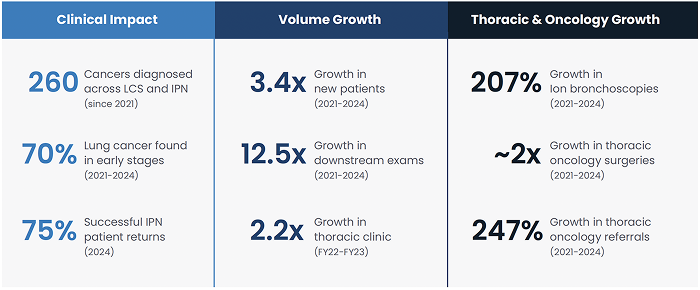
Since go-live, we’ve diagnosed over 260 lung cancers through the platform, more than 10X the number we detected in the two years prior.
Technology alone is not the solution. But the right infrastructure enables consistency, accountability, and growth. If you want to create a large impact, you have to build on something capable of getting you where you want to be.
.png)
A successful lung cancer program goes beyond identifying nodules to ensure patients are navigated, evaluated, and treated without unnecessary delay. It requires workflow design that supports reliability, accountability, and clinical excellence.
Before implementing a structured process, patients were vulnerable to delayed follow-up and misdirected referrals, making it harder to get the right care quickly. Follow-up was inconsistent, and our care pathways varied based on where the patient entered the system. Once we implemented a longitudinal care management platform, we were able to design clear, repeatable workflows that aligned with evidence-based guidelines and the reality of our clinical resources.
We established defined sequences for patients based on their level of risk: → Incidental finding → nodule clinic evaluation → pulmonary workup → biopsy and staging → complete diagnosis and treatment. Time to treatment became a measurable metric.
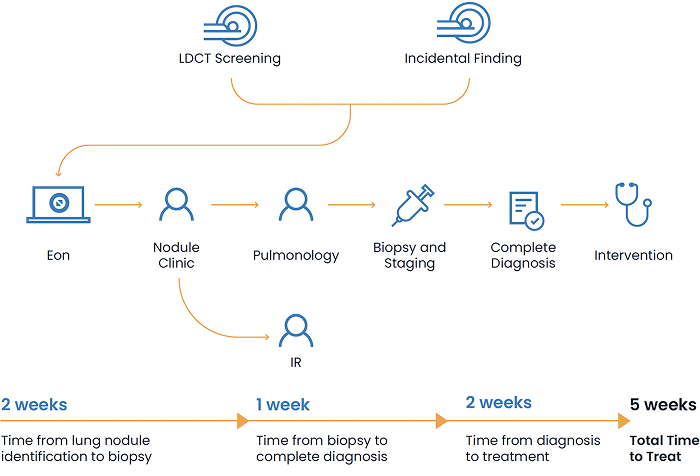
We reduced the time from nodule identification to biopsy to just two weeks, with an additional two weeks to initiate treatment. For many patients, that condensed timeline can be the difference between a Stage I and a Stage III diagnosis.
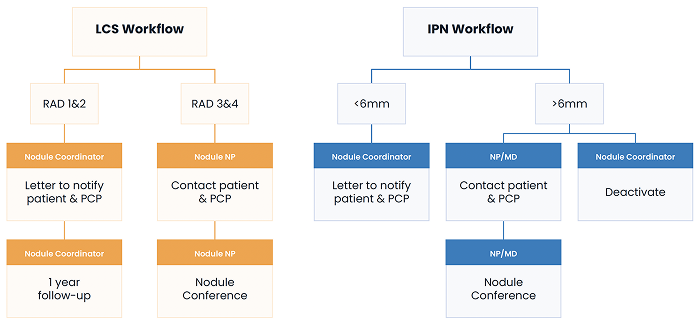
Every step has clear owners. Our Nodule Coordinator and Nodule Nurse Practitioner are responsible for low-risk and high-risk patients, respectively. Our nodule NP ensures timely clinic visits. A multidisciplinary nodule conference brings together thoracic surgery, pulmonology, oncology, radiology, and pathology to align decisions and prevent delays. Follow-up plans are documented and tracked within the system, whether they required surveillance, immediate intervention, or discharge.
Importantly, we didn’t limit this structure to lung cancer screening patients. We applied it to all incidental pulmonary nodules captured through radiology, including those from the ED and inpatient settings. That expanded our reach and enabled us to standardize care across diverse patient populations.
Designing a workflow improves efficiency, but more importantly, it is about equity. It ensures that every patient, regardless of entry point, receives timely and consistent care.
.png)
When you’re building a high-volume program, clinical judgment alone isn’t enough. You need data to guide strategic decisions and to continually refine operations. Without it, you’re operating reactively, rather than proactively.
We used multiple sources to build a comprehensive picture: patient volumes and adherence rates from the Eon platform; stage migration and time-to-treatment metrics from our tumor registry; procedural volumes and diagnostic yield from our robotic bronchoscopy systems; and financial insights from our revenue cycle team.
Those metrics told us where patients were succeeding in the pathway and where they were falling off. Early on, our focus was on identification and enrollment. Then it shifted to reducing the time to treatment. More recently, we’ve used data to optimize procedural workflows and ensure diagnostic yield remains high. Each stage of growth required a different focal point, and our metrics allowed us to shift resources accordingly.
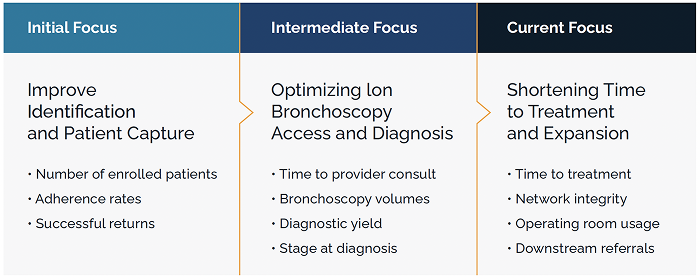
Programmatic growth is the outcome of intentional, data-driven decision-making repeated consistently across time and teams.
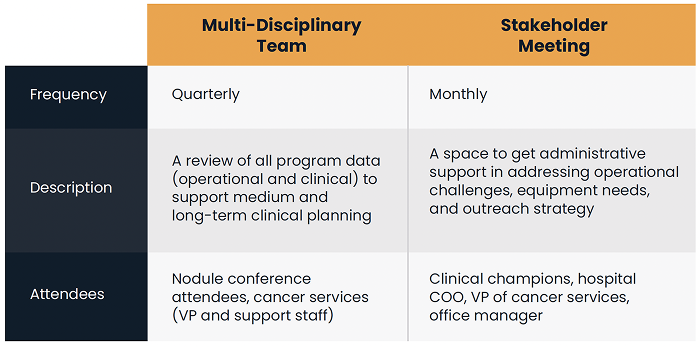
Recurring data reviews also keep our teams aligned. We hold multidisciplinary meetings monthly and quarterly, each tailored to different audiences. Our stakeholder meetings bring together operations leaders, finance, and executive sponsors. These are working sessions, helping us address gaps in equipment access, staffing, and outreach strategy in real time.
From 2021 to 2024, we saw measurable impact:
This level of growth doesn’t happen by chance. It’s the outcome of intentional, data-driven decision-making repeated consistently across time and teams.
.png)
Expanding a lung cancer program requires internal coordination and external trust. That means engaging community physicians early, understanding their concerns, and tailoring your model to solve real problems.
Outreach at its best is a two-way conversation. We spent time with referring providers asking questions: What’s not working for your patients? Where do they fall off the path? How can we make this easier for you?
That feedback shaped how we built our workflows. We clarified referral pathways, reduced time to consult, and ensured timely communication back to referring physicians. We also demonstrated how our program could reduce their administrative burden by taking on coordination, follow-up, and even patient education.
We find that when physicians see the impact on their patients and the time saved in their own practices, they become advocates. Outreach isn’t just about program awareness, but about building partnerships grounded in clinical integrity and mutual benefit.
Listening also extended to patients. Many of the individuals we serve face social and structural barriers to care. That means being present, responsive, and adaptable, whether it’s helping navigate transportation, offering flexible scheduling, or simply ensuring a patient hears from a real person when they need follow-up.
Ultimately, outreach is not a marketing function, but a clinical one. And when it’s done with humility and consistency, it builds the foundation for sustainable growth.
Outreach wasn’t just about program awareness, but about building partnerships grounded in clinical integrity and mutual benefit.
.png)
Looking back, the transformation of our lung cancer program wasn’t the result of any single decision or investment. It was the product of deliberate, incremental change built on urgency, grounded in clinical values, and enabled by the right infrastructure and people.
We didn’t wait for the perfect plan. We started where we were, and we built forward. And because we focused on structure, scalability, and shared purpose, we now have a program that finds more cancers earlier, navigates patients more effectively, and delivers measurable impact across the health system.
We couldn’t have done this without a longitudinal care management platform like Eon. Over these last four years, their technology has continued to evolve so that we can not only work faster, but smarter.
But there’s still more to do. We’re expanding into new cohorts like renal, adrenal, and thyroid, because we know the same opportunity exists across other disease states. And we’re continuing to refine our processes to close even more gaps in care.
My advice to any clinical leader starting this journey is simple: Don’t wait. Every day you delay is another patient you might miss. Start with people who care. Build a strong foundation. Design workflows that work. Use your data. And listen to your patients and to your partners.
If you do that, you’ll not only build a better program, you will also change outcomes.


.png)